Main Uses and Precautions of Safety Cable Lockout
The safety cable lockout is also known as a standalone hardware lock. It is generally composed of a steel cable and a polypropylene lock body, made from highly wear-resistant stainless steel plates. It is durable, highly visible, and treated with an anti-rust coating.
The application of safety cable locks helps solve the problem of multiple people managing the same machinery or pipeline. When certain equipment requires maintenance, the power supply must be cut off and locked at the control panel to prevent accidental operation, which could otherwise cause injury to maintenance personnel.
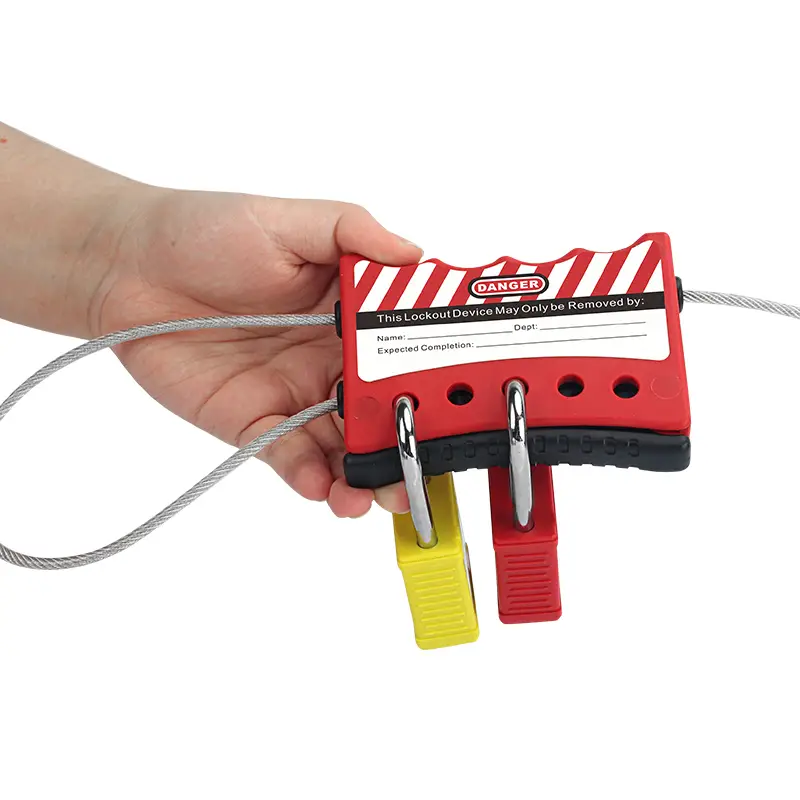
Uses of Safety Cable Lockout:
When only one person is performing inspection or maintenance, a standard padlock can be used to lock the control panel. However, when multiple people are involved, a safety cable lockout system should be used.
After maintenance is completed, each worker removes their own padlock from the lockout device. However, the power supply remains locked and cannot be turned on until all maintenance personnel have left the site and all padlocks on the safety cable lockout have been removed.
Therefore, the use of safety cable lockout effectively solves the issue of multiple people managing the same equipment or pipelines. The machine can be locked by multiple employees at each shutdown point during maintenance or adjustment, and it can only be restarted after the last worker removes their padlock. Multiple padlocks can be used to ensure safety during lockout.
Precautions for Using Safety Cable Lockout:
- Select the appropriate main cable correctly; mixing cables is strictly prohibited.
- The self-locking device must be properly installed on the upper roller (protruding part).
- Before installing the safety screw, loosen it first. Open the ratchet mechanism by rotating counterclockwise. After loading the main cable, rotate clockwise to secure it. Then tighten the safety screw (do not overtighten).
- After installing the main cable, check the flexibility of the self-locking device. If it does not slide smoothly, adjust the spring tension appropriately.
Test the lock 1–3 times to ensure proper function. If any abnormalities are found, stop using it immediately. Unauthorized modification or repair is strictly prohibited. The safety cable must always be used with the self-locking device.


Comments
Post a Comment