What Is the Structure of a Ball Valve Lockout?
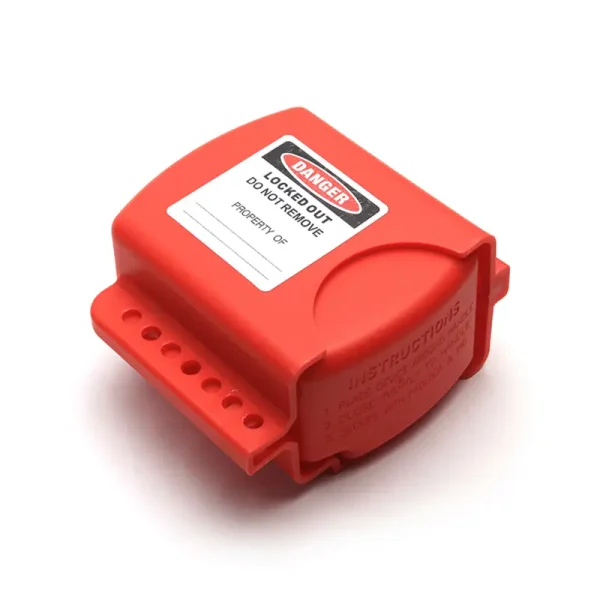
A ball valve lockout device generally consists of a base and a cover that is hinged to the base via a rotating shaft. The base is equipped with a first clamp and a second clamp designed to grip the valve handle.
Corresponding positions on the base and the cover are provided with locking holes. After the first and second clamps secure the valve handle, the cover is flipped over to enclose the base and the two clamps. The locking holes on the cover and base align, allowing a padlock to pass through them, thereby preventing the cover from being opened.
In this way, the valve handle cannot be turned, effectively preventing human error and accidental operation. Only authorized personnel can open the ball valve lockout by removing the padlock inserted through the aligned holes.
However, a key issue with existing designs is that the rotation of the adjustment screw used to drive the movement of the double clamps is relatively slow. The screw often requires multiple turns to bring the first clamp close to the second clamp. Since the clamps must tightly grip the valve handle, installing the ball valve lockout can be time-consuming.


Comments
Post a Comment