What challenges do we encounter in the application of safety padlocks?
When using safety padlocks, it is inevitable to encounter certain challenges. Let me guide you through the key issues.
Safety padlocks must be able to control switches for various energy sources. Many production processes rely on different types of energy, and in certain environments, these energy sources must be disconnected or otherwise controlled. Without such locks, improper operations may occur. Throughout the use of safety padlocks, these requirements must be taken into account. However, due to differences in manufacturers’ overall quality levels, their performance and reliability may vary in practice.
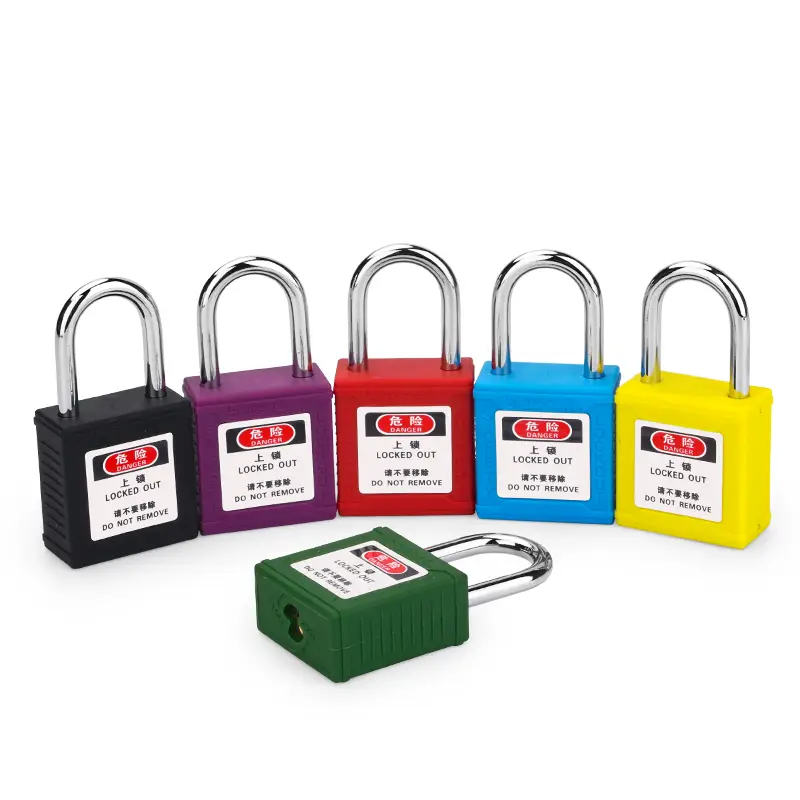
Safety Padlocks
During the use of safety padlocks, a certain level of versatility must also be ensured. Only then can they be considered truly high-quality products. So, what kind of versatility is required?
First, they must be capable of controlling power switches of various electrical transformers. During maintenance or in abnormal conditions, it is necessary to isolate transformer power supplies; otherwise, it may pose a threat to workers’ safety. Therefore, this function is also an important requirement related to energy conservation and environmental protection.
Moreover, when applying safety padlocks in pipeline systems, it is essential to ensure effective control of shut-off valves. This means such locks must provide corresponding functional capabilities at this level. Whether they can truly meet safety technical performance and design requirements depends largely on the manufacturer. Some manufacturers fail to meet these standards during actual use, which can lead to customer dissatisfaction.
In addition, safety padlocks should also provide a certain level of administrative control. In specific situations, operational activities must be managed with appropriate authorization restrictions, and these controls must be implemented through the locking process to ensure proper and secure execution.


Comments
Post a Comment