Detailed Guide to the Use and Precautions of cable lockout
Cable lockout are generally used together with various types of safety ropes. They allow users to easily control the sliding speed of the rope, preventing falls and ensuring personal safety when working at heights. So, what’s special about the way safety cable locks are used? Below is a brief explanation of the basic operating principles.
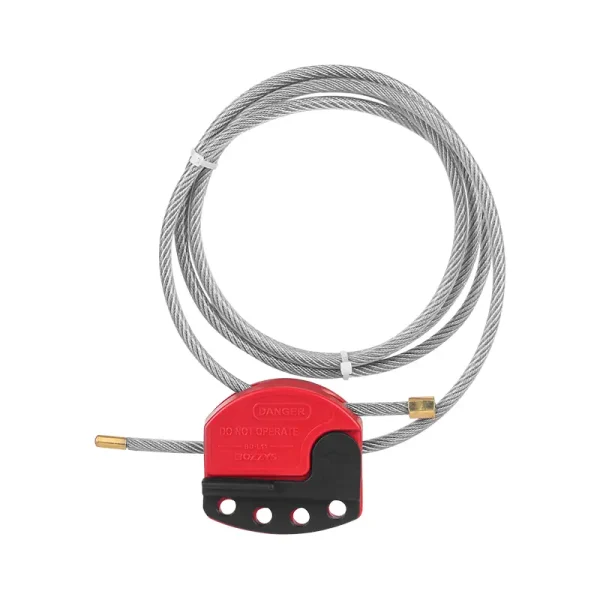
How to Use a Safety Cable Lock:
- For thin ropes:
Hold the secured end of the rope (the side connected between the building and the vehicle) with your left or right hand, and hold the handwheel and tensioning device with the other hand. When the user leans back, the safety rope gradually loosens as the handwheel is released. Once the wheel is tightened again, the lock will secure the rope in place. - To shorten the safety rope:
Pull the free end of the rope with your right or left hand. When the user moves their body, they can lean back toward the structure in the opposite direction. During use, the rope connector and decelerator should be attached to the side ring of the self-positioning belt.
Precautions for Using a Safety Cable Lock:
- The main rope must be properly selected — never mix different types of ropes.
- The self-locking device must be correctly installed on the upper roller (protruding section).
- Before installation, remove the safety screw and rotate the pawl assembly roller counterclockwise along the pawl shaft to open it. After inserting the main rope, rotate clockwise to close it. Then engage the safety lock and tighten the screw (but do not overtighten).
- After installing the main rope, check the flexibility of the self-locking device by moving it up and down. If movement is not smooth, adjust the half-pull spring appropriately. Test the locking function 1–3 times to ensure proper operation.
If any abnormality is found, stop using the device immediately. Do not modify or disassemble the safety rope self-locking device without authorization.


Comments
Post a Comment